


by Dr Georgie Rychner, Senior Researcher, Legal Services Research Centre
As part of the first annual Lawyer Census in March 2025 which explores key issues facing the profession, lawyers were asked about their experiences of demeaning verbal and non-verbal behaviours in legal workplaces, described as uncivil behaviours. Such behaviour includes ignoring inputs from colleagues, not listening to or ignoring a colleague, speaking over a colleague, disparagement, snide remarks, professional discrediting, sarcasm and ostracism.
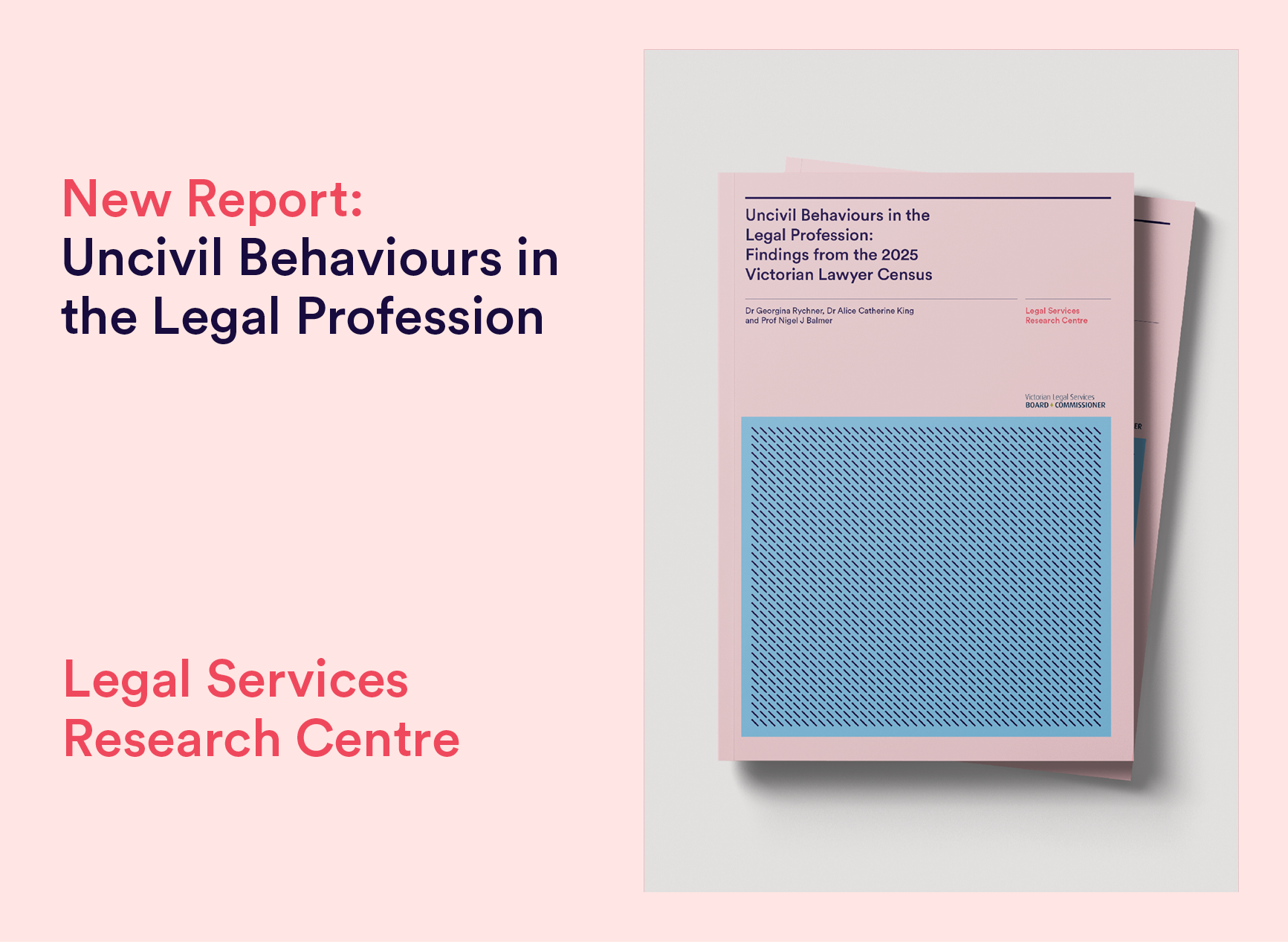
The results have been published in a new report, Uncivil Behaviours: Findings from the Victorian Lawyer Census 2025. The report contains key insights into how verbal disrespect, professional undermining and unacceptable behaviours are experienced and witnessed across the profession, and indicates the importance of civility as a practice that promotes cooperation and professionalism amongst lawyers.
Uncivil behaviours are common
The survey found that an alarming 83% of lawyers experienced or witnessed uncivil behaviours in the past 12 months. Over one fifth of lawyers (22%) experienced one or more of these behaviours with high frequency, and close to a quarter (24%) witnessed these behaviours at high frequency.
Verbal disrespect was the most common form of uncivil behaviour, experienced by 63% of respondents. This was followed by professional undermining (experienced by 59%) and unacceptable behaviours or comments relating to personal characteristics (experienced by 34%).
Everyone experiences this – but some more than others
While uncivil behaviours were experienced and witnessed at high rates across the profession, certain cohorts experienced and witnessed behaviours at elevated rates. In particular, female and non-binary respondents (or those using another term), younger respondents and those who identify as LGBTQIA+ experienced and witnessed these behaviours at higher rates. All Aboriginal or Torres Strait Islander respondents who completed the module (n=12) had experienced or witnessed uncivil behaviours.
‘Low-intensity’ but high impact
Uncivil behaviours did not occur in isolation. They clustered with other aspects of negative workplace culture, including inadequate compensation, excessive workload, conflicts with values or professional obligations, and sexual harassment. In other words, incivility and harmful workplace conditions appear to be mutually reinforcing elements of toxic workplace culture.
Those who experienced or witnessed uncivil behaviours had higher rates of psychological distress, burnout and dissatisfaction across every life domain, including with their job, physical health and personal relationships.
Respondents who were intending to leave the profession cited incivility and workplace culture in their rationales for wanting to leave. As one respondent wrote, ‘I still love being a lawyer but so tired of unhealthy workplaces.’
Why does it matter?
The research demonstrates that uncivil behaviours among Victorian lawyers are ubiquitous and persist at high rates. The cost is tangible – diminished wellbeing, burnout, lost talent and ultimately, eroded trust in the legal system. Though in many cases, uncivil behaviours may appear low impact, they scaffold more harmful conduct and degrade workplace culture.
Understanding and responding to these behaviours matters not only for those within the profession, but for the communities that depend on a healthy, sustainable legal system.